Ecosystem Resilience
When do big shocks collapse ecosystems into a persistent, degraded state?
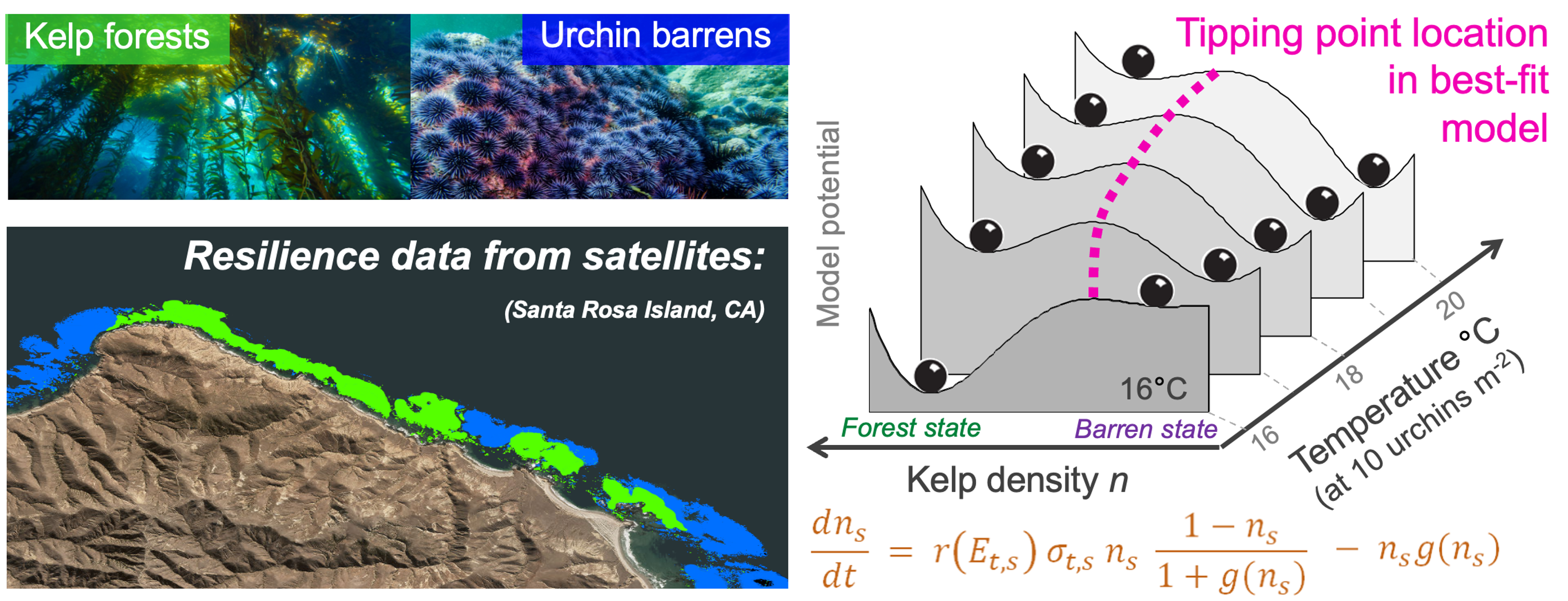
Our go-to study system for resilience have been kelp forests. Here, urchin herbivores can bulldoze lush forests into rocky barrens. It turns out this happens via animal behavior: forests collapse when urchins get too hungry to hide from storms, stress, and predators. Urchin barrens can then persist indefinitely even with mass immigration of spores and larvae from adjacent forests. As warming reduces kelp growth, it shifts the ecosystem’s tipping points [the SN bifurcation] towards large-scale urchin barrens in future climates (In preparation).
Theoretically, we explore new feedbacks that can create multiple stable states (saddle-node bifurcations) and how the character of state shifts depends on network structure. These can be key in conservation:
Societal acclimation. Local economies and public perception often acclimate to the loss of ecosystem services within 5-20y. This erodes the incentive for stakeholders to mitigate environmental damage. Thus, socio-ecological feedbacks can lock-in a degraded socio-ecological regime unless societies and managers begin mitigating quickly.
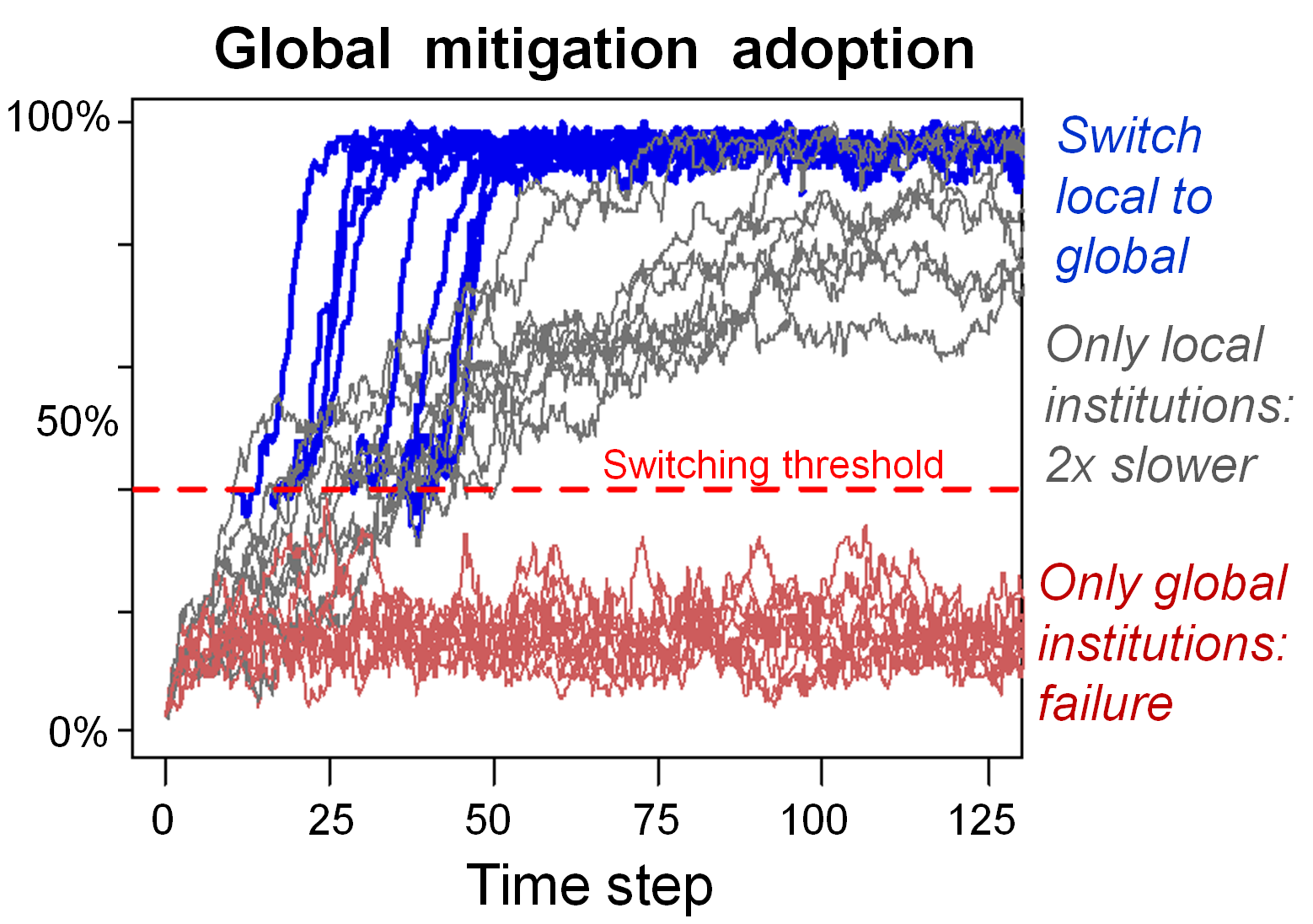
Conservation policy. How do we transition societies to sustainability quickly? Establishing the institutions required is often difficult, as we have seen with legally binding climate agreements. We discover that institutions at different scales synergistically promote sustainability adoption: focusing on regional climate agreements for now allows early adopters to hold their neighbors accountable. As local efforts ratchet up commitment, shifting to global agreements becomes critical to sway along hold-out countries.